
Why Casino Crime Fiction Hooks Us Instantly
Casinos have long fascinated both writers and readers because they represent a carefully constructed illusion of control. Every detail — from lighting and sound design to table layout and customer flow — is engineered to create a sense of order and predictability. Yet beneath this polished surface lies an environment shaped by risk, manipulation, and calculated deception. This duality makes casinos an ideal setting for crime fiction.
Unlike traditional detective stories, where the central question is often “who committed the crime,” casino-based narratives tend to focus on how the crime was executed. The intellectual puzzle becomes the driving force of the story. Authors use this structure to immerse readers in a world where observation, psychology, and strategy are more powerful than brute force.
Characters such as Tony Valentine, a retired police officer turned casino consultant, embody this shift. Rather than chasing obvious criminals, he specializes in identifying individuals who exploit systems in subtle, almost invisible ways. His work is not about reacting to crime after it happens, but about recognizing patterns, inconsistencies, and behavioral cues before they fully reveal themselves. This approach creates a more analytical and engaging reading experience, where the audience is invited to think alongside the protagonist.
The Art of Cheating: Intelligence as a Criminal Tool
One of the defining features of casino crime fiction is its emphasis on intelligence as the primary weapon. The criminals portrayed in these stories are rarely impulsive; instead, they are methodical, patient, and highly skilled at manipulating both systems and people.
Writers in this genre often construct elaborate scenarios in which minor irregularities signal larger schemes. A player who wins too consistently, a dealer who appears distracted at key moments, or a sequence of outcomes that seems statistically improbable can all serve as entry points into deeper investigations. These subtle clues transform the narrative into a layered puzzle, encouraging readers to question every detail.
The schemes themselves are typically grounded in realistic techniques. These may include coordinated team play across multiple tables, discreet communication methods between accomplices, or psychological strategies designed to mislead casino staff. By presenting these methods in a structured and believable way, authors not only build tension but also provide insight into the mechanics of deception. As a result, the casino becomes more than a backdrop; it functions as a complex system that can be studied, exploited, and, ultimately, defended against.

Slot Machine Fraud: The Illusion of Randomness
Slot machines are often perceived as the simplest form of gambling, relying entirely on chance and requiring minimal player interaction. However, in crime fiction, this apparent simplicity becomes an opportunity for sophisticated manipulation. The concept of randomness itself is frequently challenged, revealing vulnerabilities that can be exploited by knowledgeable individuals.
Consider scenarios inspired by games such as the Le Fisherman slot, where outcomes appear unusually favorable to certain players. While these patterns may initially be dismissed as luck, they often signal deliberate interference. Authors use such situations to explore the tension between perceived randomness and underlying control.
In these narratives, slot machine fraud can take several forms, including the exploitation of software patterns, the use of concealed devices to influence results, or coordinated distractions that allow physical tampering. In some cases, insider involvement plays a crucial role, granting access to systems that are otherwise secure. By highlighting these possibilities, writers create a compelling contrast between the expected unpredictability of the game and the calculated precision of the fraud.
This tension enhances the reader’s engagement, as each spin of the machine carries both narrative and psychological weight. What appears to be a simple act of chance is transformed into a potential component of a larger, meticulously planned scheme.
The Depth of the Tony Valentine Series
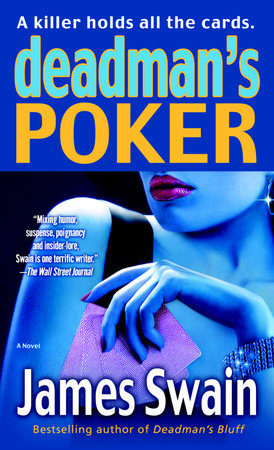
Although casino-related crimes serve as the initial point of interest, the Tony Valentine series by James Swain extends far beyond technical explorations of cheating. At its core, the series is a character-driven body of work that examines human behavior, relationships, and moral complexity within a high-stakes environment.
Tony Valentine is not portrayed as a conventional hero. He is experienced and perceptive, but also shaped by personal challenges, including strained family relationships and a career spent confronting deception. These elements add depth to his character, allowing readers to engage with him on a psychological level rather than viewing him solely as a problem-solver.
The structure of the series reflects this broader focus. While each novel typically begins with a specific casino-related mystery, the narrative often expands to include interconnected storylines involving organized crime, personal vendettas, and ethical dilemmas. This layering creates a more comprehensive portrayal of the world in which the characters operate, emphasizing that the consequences of deception extend beyond the casino floor.
Furthermore, the series balances technical detail with emotional resonance. Readers are not only introduced to the mechanics of various scams but are also invited to consider the motivations behind them. This combination of intellectual and emotional engagement distinguishes the series from more narrowly focused crime fiction, positioning it as both an exploration of criminal ingenuity and a study of human nature.
Final Thought
Casino crime fiction remains compelling because it reflects a broader truth about systems and control. While environments such as casinos are designed to appear secure and predictable, they are ultimately constructed by humans and therefore susceptible to manipulation.
By focusing on intelligence, strategy, and human behavior, stories like those in the Tony Valentine series demonstrate that crime is not always a matter of force, but often of insight. This perspective not only enhances the complexity of the narrative but also reinforces its relevance, reminding readers that behind every system lies the possibility of someone attempting to outthink it.