
The Real Difference Between a Thriller and a Mystery
Walk into any bookshop and the crime section blurs the two words together as if they were interchangeable: thriller, mystery, suspense, all shelved side by side. Readers use them loosely, and even publishers slap both on the same cover. Yet thrillers and mysteries are not the same thing, and the difference is not a matter of marketing but of how the story is built and what it does to the reader. Understanding the distinction makes you a sharper reader and, for anyone who writes, a more deliberate one. The line between the two comes down to a single question about where the story's tension lives — and once you see it, you can never unsee it.
The mystery is a question
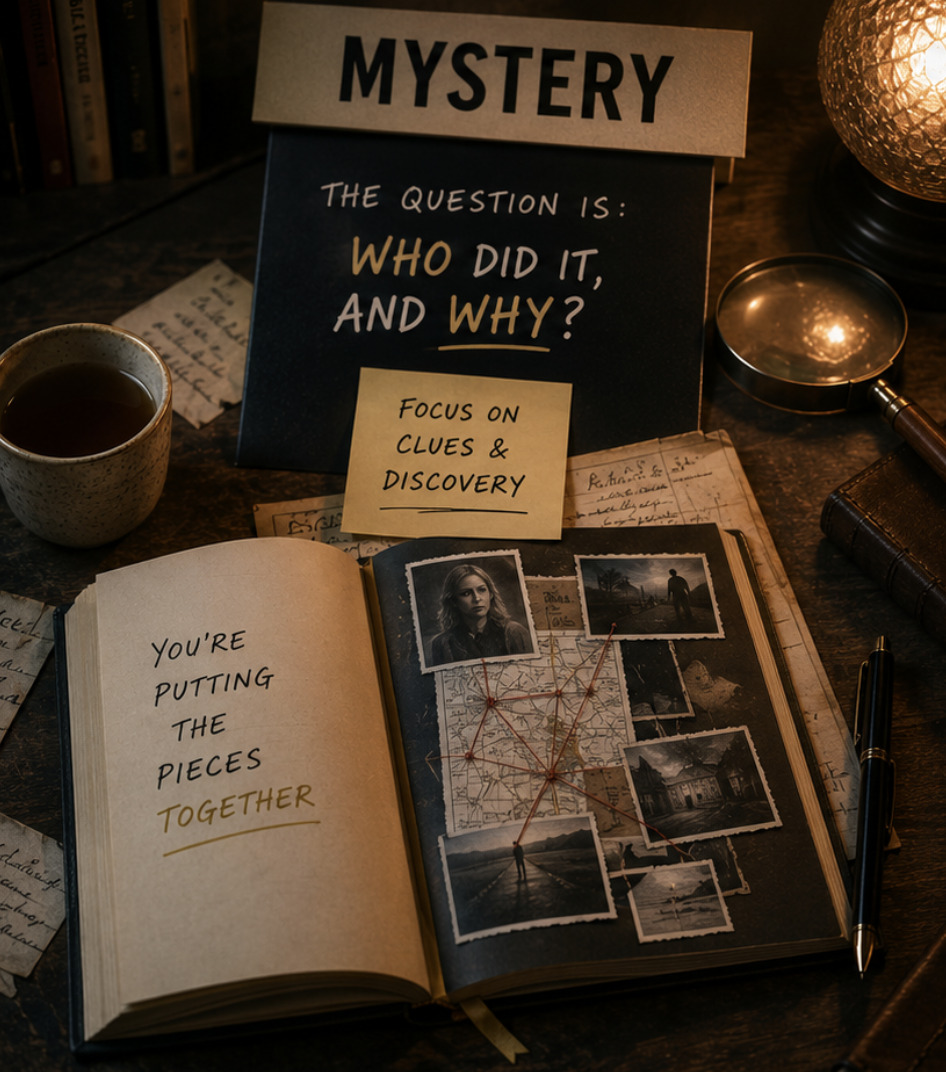
At its heart, a mystery is a puzzle, and the engine that drives it is a question the reader wants answered. Usually the question is some version of "who did it and why?" A crime has been committed — often before the story even begins — and the narrative moves forward as a detective, an amateur sleuth or the reader themselves works to uncover the truth. The pleasure of a mystery is intellectual as much as emotional: it is the satisfaction of assembling clues, weighing suspects and arriving, with or ahead of the detective, at the solution. The crucial thing is that the reader does not know a key piece of information, and the whole structure exists to withhold and then reveal it.
This shapes everything about how a mystery is told. Because the reader is meant to solve the puzzle, the writer plays a careful game of fair play — planting clues in plain sight, disguising them with misdirection, and offering the honest possibility that an attentive reader could work it out. The famous tools of the genre, from the misleading clue to the closed circle of suspects, all serve this puzzle. The art of the red herring, explored in the art of the red herring, exists precisely because a mystery is a contest of wits between writer and reader. The reader knows less than they want to, and the forward pull of the story is the desire to know. The classic whodunit is the purest expression of this: a question posed on page one and answered, satisfyingly, at the end.
The thriller is a threat
A thriller works on an entirely different principle. Here the engine is not a question to be answered but a danger to be survived. Something terrible is happening or is about to happen, and the tension comes from the race to stop it. Often the reader knows far more than the characters do — we may see the bomb ticking, the killer stalking, the trap being laid — and the suspense lies not in wondering what the truth is but in dreading what will happen next. Where a mystery asks "what happened?", a thriller asks "what happens now, and can it be stopped in time?"
This changes the reading experience from the ground up. A thriller is built for velocity and dread rather than deduction. Its natural weapons are pace, escalating stakes and the pressure of time, all designed to keep the reader's pulse up and the pages turning. The protagonist is frequently in danger themselves, which raises the emotional temperature far beyond that of a detective coolly examining evidence. The effect is visceral rather than cerebral: not the quiet pleasure of solving, but the gripping anxiety of survival. That is why time pressure is such a defining tool of the form, as discussed in how time pressure makes or breaks a thriller. A thriller does not want you to think; it wants you not to be able to stop.
Suspense versus the puzzle
Boiled down, the real difference is this: a mystery generates its power from a puzzle, and a thriller generates its power from suspense. The mystery withholds information and invites the reader to figure it out; the thriller often gives the reader the information and makes them squirm with what they know. One is fundamentally about knowledge — the gap between what the reader knows and what they want to know — while the other is fundamentally about danger — the gap between the threat and the moment it might be averted. This is why the two produce such different feelings. A great mystery leaves you satisfied, the pieces clicking into place. A great thriller leaves you breathless, released at last from tension it has stretched for hundreds of pages.
A useful test is to ask where the story would collapse if you removed its central element. Take the puzzle out of a mystery — tell the reader immediately who did it and why — and most of the point evaporates, because the withheld answer was the engine. Take the danger out of a thriller — remove the ticking clock, the threat, the sense that something dreadful looms — and the propulsion dies, because the dread was doing the work. The distinction is not about subject matter; a murder can anchor either. It is about what the writer asks the reader to feel: the itch to know, or the fear of what comes next.
Where the two genres meet
Having drawn the line so firmly, honesty requires admitting that many of the best books straddle it, and deliberately so. Plenty of novels are both mystery and thriller at once, weaving a genuine puzzle through a story that also races with danger. A detective may be hunting a killer's identity — the mystery — while that killer hunts the detective in turn — the thriller. The psychological suspense that dominates so much of modern crime fiction often blends the two, offering a twist to be unravelled alongside a mounting sense of threat. The categories are tools for understanding, not rigid boxes, and the richest crime writing frequently refuses to sit neatly in either.
This is why the distinction is worth knowing even though the labels blur in practice. Understanding that a mystery runs on the puzzle and a thriller on suspense lets you see what any given book is really doing, and how it is trying to hold you — whether it wants your mind or your nerves, or, in the best cases, both. For readers, it deepens the pleasure of noticing the machinery at work. For writers, it clarifies the most important decision of all: what feeling should drive this story. The words thriller and mystery may share a shelf, but they describe two distinct kinds of pleasure, and knowing which one you are reading, or writing, is the beginning of appreciating it fully.
Frequently asked questions
What is the main difference between a thriller and a mystery? A mystery is driven by a puzzle — usually who committed a crime and why — with the reader working to uncover withheld information. A thriller is driven by suspense and danger, where the tension comes from a threat and the race to stop it, often with the reader knowing more than the characters.
Can a book be both a thriller and a mystery? Yes, and many of the best crime novels are. A story can contain a genuine puzzle to solve while also racing with danger and dread. The two categories are tools for understanding how a story works, not strict boxes, and skilled writers often blend them deliberately.
Is suspense the same as mystery? Not quite. Suspense is the anxious tension about what will happen next and is the engine of the thriller. Mystery is the puzzle about what has already happened or who is responsible. Suspense makes you dread; mystery makes you wonder — and a story can use both at once.